

Flat commercial roofs found in the Little Rock area require a tailored approach to roofing due to Arkansas’s range of weather conditions, including intense summer heat and occasional winter storms. Two of the most widely considered roofing systems for these buildings are TPO (Thermoplastic Olefin) and built-up roofing (BUR). Understanding the differences between these systems in terms of durability, energy efficiency, and maintenance requirements can help property owners choose the best fit for their businesses in Central Arkansas.
Understanding TPO Roofing Systems
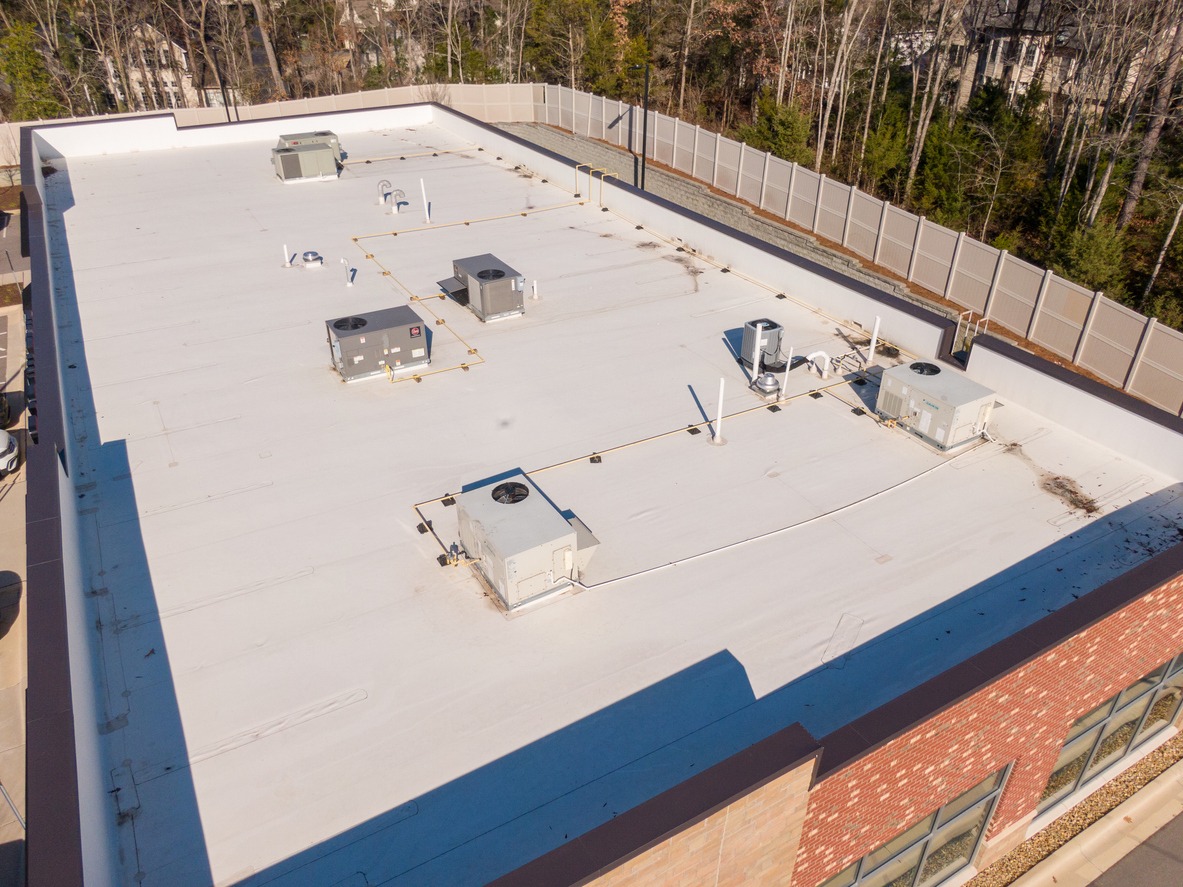
TPO roofing membranes have become increasingly popular for commercial properties in Arkansas. These single-ply systems consist of a blend of polypropylene and ethylene-propylene rubber, designed to be heat-reflective and energy efficient. TPO roofs are installed in large, white sheets that are either mechanically attached or adhered to the roof deck.
TPO is known for:
-
UV resistance, which helps manage the intense sun exposure experienced in Little Rock summers
-
Flexibility, allowing the material to expand and contract during temperature swings
-
Seam strength, achieved through hot-air welding, minimizing the risk of water intrusion
Because of its white reflective surface, TPO is especially valued for its ability to reflect sunlight and reduce cooling costs in commercial buildings. This makes it a top contender for businesses looking for energy efficient roofing installation options.
Built-Up Roofing (BUR) Basics
Built-up roofing, often called “tar and gravel” roofing, is one of the oldest systems used on low-slope roofs in Arkansas. BUR systems involve multiple layers of bitumen (asphalt or coal tar) alternated with reinforcing fabrics, usually finished with a layer of gravel or mineral granules. The result is a robust membrane that provides excellent protection against the elements.
Key traits of built-up roofing:
-
Multiple layers for redundancy, offering strong resistance to punctures or leaks
-
Good fire resistance, partly due to the gravel surface
-
Effective insulation and noise reduction
BUR’s ability to withstand heavy foot traffic and its record of proven performance in the variable climate of Central Arkansas keeps it relevant for businesses prioritizing durability in their commercial roofing.
Durability Comparison: TPO vs BUR
Durability is critical for commercial roofs in places like Conway or Little Rock, where intense storms and temperature changes are common. TPO roofs generally last about 15 to 25 years, provided they are professionally installed and properly maintained. They offer impressive flexibility and resist fungus, algae, and punctures.
BUR systems, on the other hand, can exceed 30 years with the right roof maintenance. They stand up well to repeated foot traffic and resist water damage thanks to their layered construction, though ponding water may become an issue over time.
Energy Efficiency and Seasonal Performance
Energy efficiency is a major concern for many Arkansas business owners, especially in urban areas like Benton or Bryant, where electricity costs can soar during peak summer months. TPO’s reflective properties reduce heat transfer, aligning well with green building standards and helping maintain indoor comfort.
BUR doesn’t naturally reflect as much sunlight, but its heavy mass can limit heat gain during the day and heat loss at night. When covered with a white gravel layer, BUR roofs can achieve better solar reflectance, yet they may still require more cooling energy than TPO during hot seasons.
Maintenance and Long-Term Considerations
Routine roof repair is required for both systems, but considerations differ:
-
TPO typically needs regular inspections at seams and flashings but is easier and faster to repair or patch when damage occurs.
-
BUR often calls for more involved maintenance due to multiple layers and surface gravel, but its layered structure often makes leaks easy to locate and repair locally.
When considering commercial roof replacement, property owners should also factor in local exposure risks such as tree debris or frequent hail which might tip the scales toward one system over the other based on your building’s exposure and roof access needs.
Ready to Discuss Your Next Roofing Project in Central Arkansas?
If you are a commercial property owner in Little Rock, Fort Smith, Conway, Benton, Bryant, Ward, Austin, Searcy, or surrounding Arkansas communities and need guidance on choosing between TPO and built-up roofing, the team at Titan Roofing & Construction is here to help. Contact us at 501-476-7663 or fill out our online form to schedule a consultation with our experienced professionals and discover which roofing solution best fits your business’s needs.